
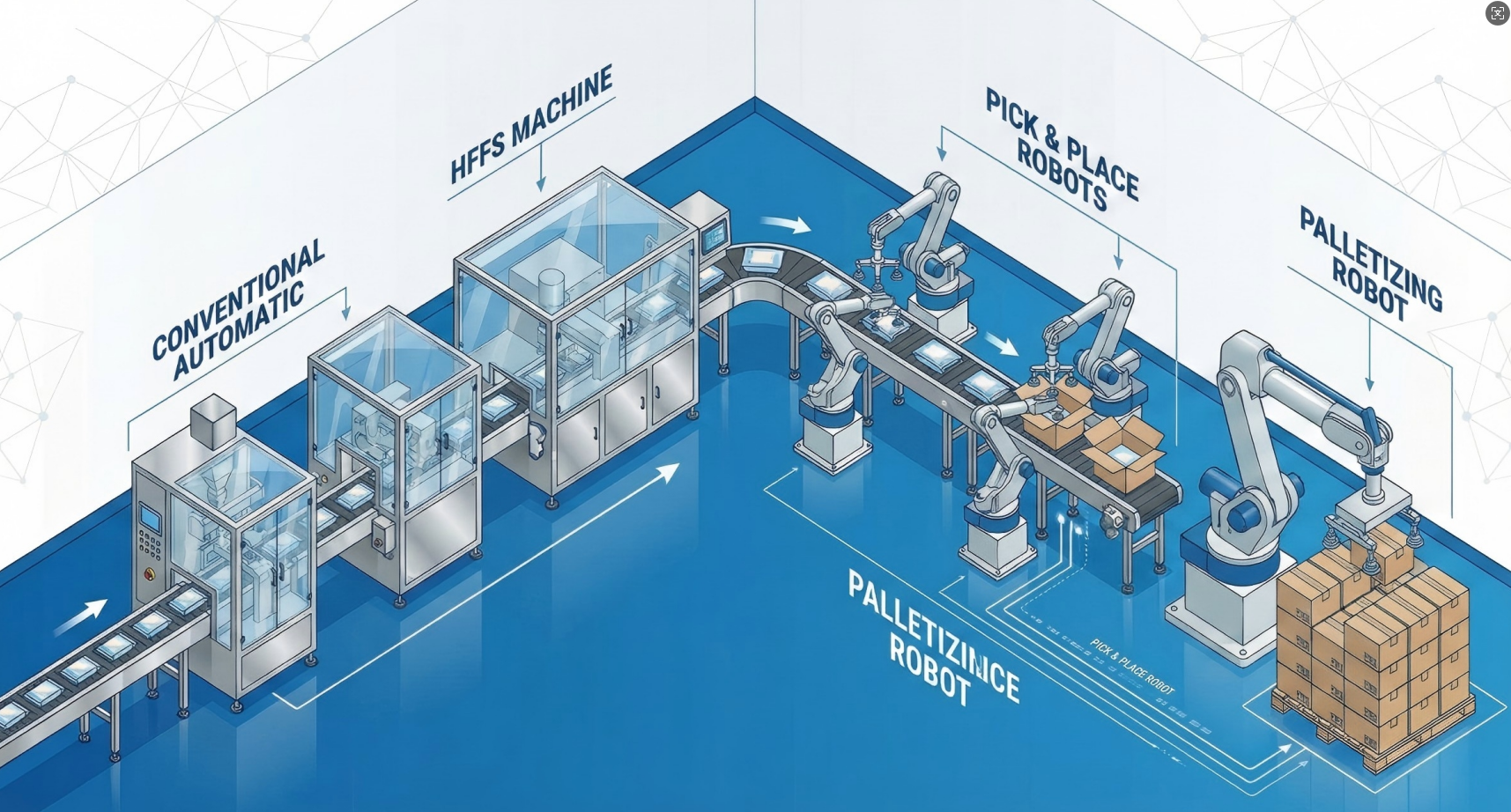
In today’s manufacturing landscape, the transition from simple automation to advanced robotics is no longer just a trend—it is a competitive necessity. To understand the shift, consider a household analogy: a standard automatic coffee machine follows a fixed program, while a robotic barista can adapt to different cup sizes, milk types, and decorative requests.
For factory managers, the critical question remains: Where is your production line currently stuck? Whether the bottleneck is rising labor costs, low yields, hygiene requirements, or strict delivery deadlines, robotics offers a transformative solution.
Understanding the distinction between these two technologies is the first step toward a successful upgrade.
Traditional automation is designed to solve the problem of "repetitive labor". It involves a sequence of fixed movements to complete tasks such as weighing, filling, sealing, and labeling.
Typical Workflow: Product receiving → Sorting → Material forming → Filling → Sealing → Quality inspection → Shipping.
Robotic packaging serves as the "flexible brain and mechanical hand" of the line. It utilizes robotic arms combined with vision sensors to execute complex movements like picking, packing, and palletizing. Common applications include high-speed pick-and-place, case packing, and palletizing.
This application replaces the repetitive motion of workers standing at a conveyor belt. Delta robots grab snacks, biscuits, or frozen foods and place them precisely into trays or boxes. In the food industry, these systems prioritize high hygiene standards and gentle handling for fragile products.
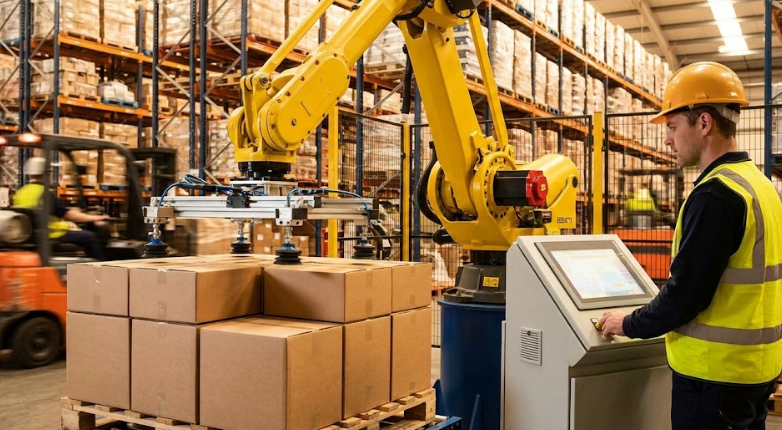
Robots excel at heavy-lifting tasks. Case-packing robots use vision systems to orient products correctly into cartons , while palletizing robots stack various box weights and types, significantly reducing the risk of workplace injuries.
By integrating robots with machine vision, lines can identify damaged products or missing items and automatically reject them. This synergy improves food safety and ensures total traceability via RFID or sensors.
Hygiene and Safety: Robots reduce human contact with food, meeting strict safety regulations and lowering contamination risks.
Handling Multi-SKU Production: With frequent promotions and diverse product types, robots allow for rapid "one-click" changeovers, reducing downtime compared to traditional rigid machinery.
ROI and Efficiency: Calculating the Return on Investment (ROI) involves looking at labor savings, increased throughput, and reduced waste, typically resulting in a 2–3 year payback period.
It is important to view robots as an enhancement rather than just a replacement. Traditional machines like Vertical Form Fill Seal (VFFS) or Horizontal Form Fill Seal (HFFS) systems can be integrated with robotic arms to create a seamless, high-speed production line.
At LTC Bagging System, we specialize in "embedding" robotics directly into your workflow to solve the most complex packaging challenges.
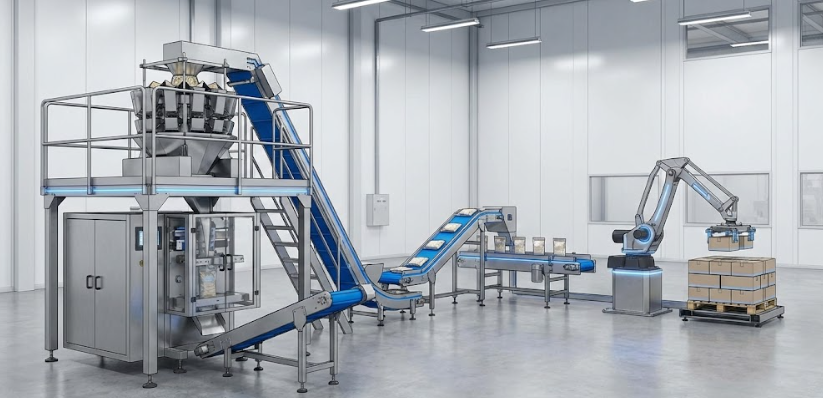
Before jumping into complex robotics, we ensure your core line is stable. Our primary solutions include:
Automatic Packing Machines: Reliable systems for various production scales.
Specialized Fillers: Dedicated VFFS systems for solid snacks and powders.
Versatility: We also provide mature solutions for non-food sectors, including hardware and medical devices.
We design with a Whole-Line Thinking approach. Our systems support seamless integration with robotic cells for end-of-line palletizing and case packing. We focus on high hygiene standards, waste reduction through precise dosing, and flexible structures that adapt to various packaging materials.
Ask yourself these five questions to gauge your readiness:
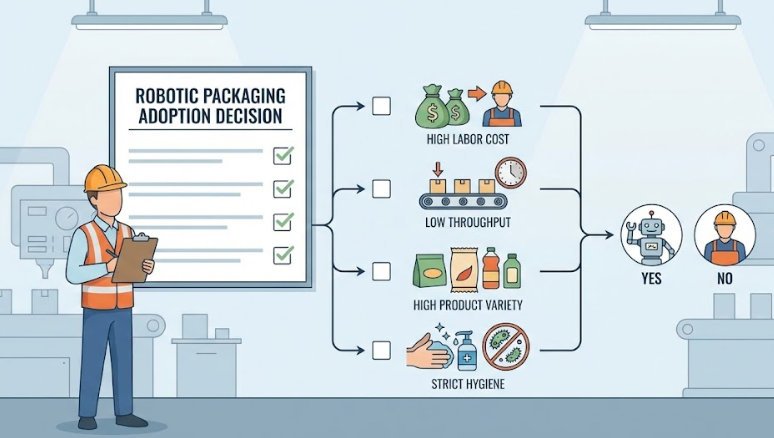
Is manual labor cost consistently exceeding your budget?
Do you have clear bottlenecks at the picking or packing stage?
Are your SKU changes frequent, causing long downtimes?
Is human error leading to hygiene or compliance issues?
Do you plan to expand capacity within the next 2–3 years?
We suggest a phased approach: start with high-ROI areas like Palletizing, then move to Case Packing, and finally Pick & Place. When consulting with us, please prepare data regarding your daily output, SKU dimensions, and current floor space.
The future of packaging lies in Collaborative Robots (Cobots), AI-driven vision, and Digital Twins for line simulation.
Q: What is the main difference between automatic and robotic packaging?
A: Automatic packaging is rigid and task-specific; robotic packaging is flexible and can adapt to different products via programming.
Q: Is robotic packaging only for large factories?
A: No. With the rise of affordable cobots, small to medium-sized businesses can now achieve high ROI through targeted automation of specific bottlenecks.
Q: How do robots improve food safety?
A: They minimize human contact with food and are built with materials that withstand intensive cleaning protocols (CIP).
Q: Can I upgrade my existing machines with robots later?
A: Yes, many traditional machines can be integrated with robotic units for secondary packaging like case packing or palletizing.
Contact: LTC Bagging System
Phone: +8613337332946
E-mail: [email protected]
Add: Wenzhou, Zhejiang Province, China