
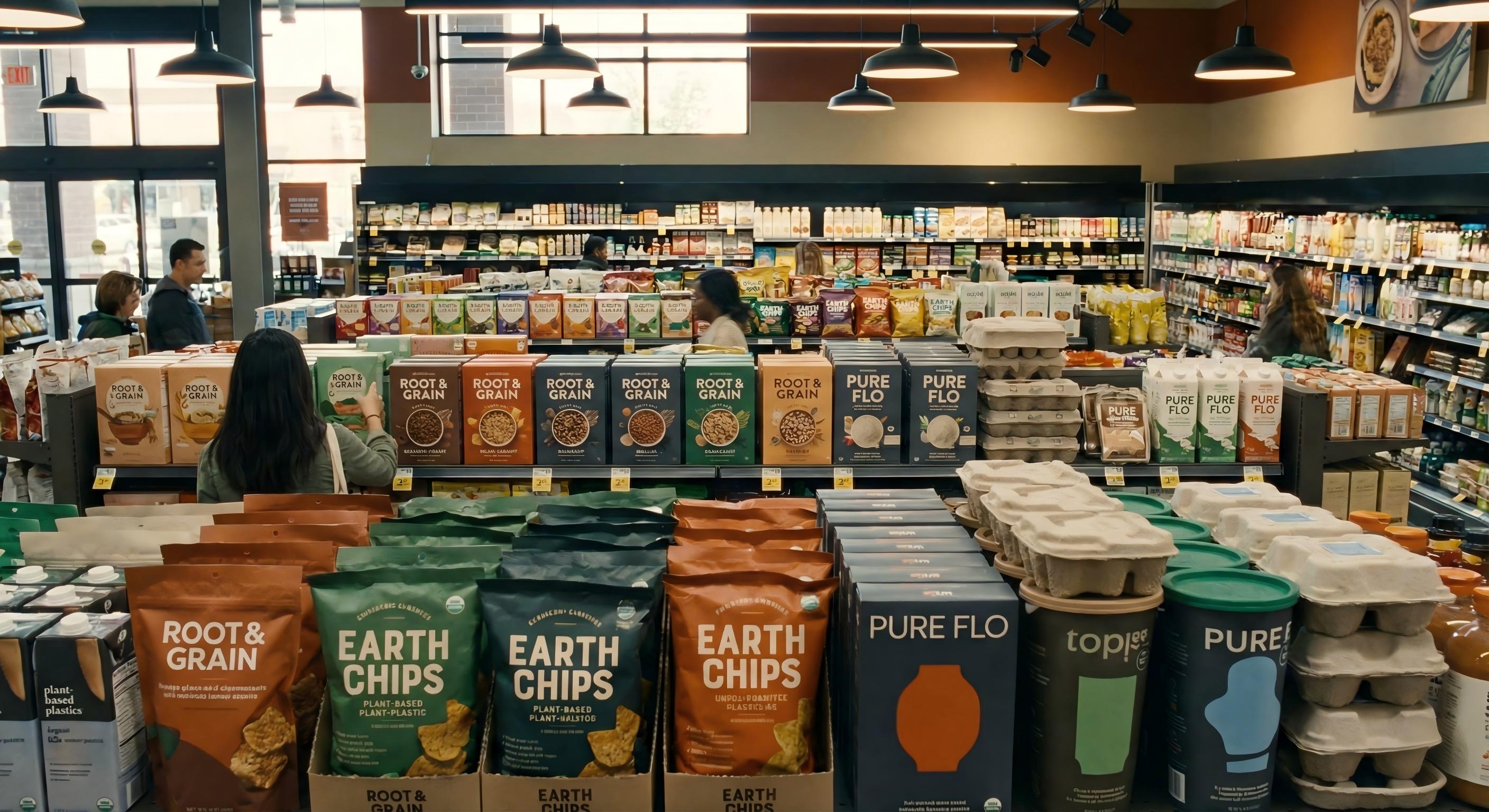
Walk down any supermarket aisle, and you will notice products—from snacks to frozen goods—packaged in a variety of materials. Some feel premium and sturdy, while others feel flimsy. The difference often lies not just in the product itself, but in the strategic choice of packaging bag material.
For factory owners, production managers, and packaging engineers in the food, daily chemical, or pet food sectors, choosing the right material is rarely simple. You are likely balancing competing demands: ensuring sufficient shelf life, achieving a desirable brand aesthetic, managing costs, and crucially, ensuring the material runs smoothly on your existing or planned automatic packing machine.
Selecting packaging isn't just about buying film; it's about ensuring product integrity and production efficiency. This guide will walk you through a practical decision-making process: starting with your product needs, understanding mainstream materials, evaluating machine compatibility, and finally, providing a decision checklist to assist your procurement.
Before diving into acronyms like PE or PET, the first step is to clearly define the "application scenario" for your product.
The physical and chemical characteristics of your product dictate the baseline requirements for the packaging material.
Moisture Sensitivity: Dry products like crispy snacks or dehydrated powders require high moisture barriers to prevent sogginess or clumping.
Oil and Fat Content: Products like nuts or chips need materials with oil resistance to prevent grease from migrating through the bag, which ruins shelf appeal.
Aroma Retention: Coffee or strong-flavored spices need high aroma barriers to keep the scent in and external odors out.
Acidity or Alkalinity: Certain liquid or paste products may react with specific plastic layers, requiring chemically resistant materials.
The journey your product takes determines the physical strength and barrier properties required.
Ambient Supply Chain: General snacks may only need moderate protection.
Cold Chain (Frozen Food): Packaging for frozen dumplings or meats must endure sub-zero temperatures without becoming brittle or cracking.
E-commerce: Products shipped individually need higher puncture and tear resistance to survive complex logistics compared to palletized retail goods.
Consider the end-user experience.
Single vs. Multiple Use: A single-serve sachet has different requirements than a family-pack granola bag that needs a resealable zipper.
Display Requirements: Does the bag need to stand up on a shelf (requiring stiffer material) or hang?
convenience Features: Will the consumer need to heat the product in the bag (requiring microwave-safe materials)?
Once you know what the bag needs to do, you can match those needs to available materials. Most modern flexible packaging consists of multilayer laminates, combining different materials to achieve desired properties.
These are the building blocks of most flexible packaging.
PE (Polyethylene): The workhorse of packaging. It is flexible, durable, has good moisture resistance, and is excellent for heat sealing. It's often the innermost sealing layer in a laminate.
PP (Polypropylene): Known for excellent clarity and tensile strength. It has a higher melting point than PE, making it suitable for hot-fill applications or microwaveable bags.
PET (Polyethylene Terephthalate): A rigid, strong material with excellent clarity and a good gas barrier. It is frequently used as the outer printable layer in laminates for a premium look.
Beyond basic plastics, other materials offer unique benefits.
Paper: Offers a natural, eco-friendly look and feel but generally has poor moisture and gas barrier properties on its own. It is often laminated with plastic or a bio-coating for functionality.
Aluminum Foil: The ultimate barrier against light, oxygen, and moisture. It is essential for highly sensitive products needing long shelf lives but is opaque and more expensive.
Laminated Films: The most common solution. For example, a PET/AL/PE structure uses PET for the outer print surface, Aluminum foil for the barrier, and PE for the inner sealant layer.
Here is a simplified comparison to help navigate the options:
| Material Type | Key Characteristics | Typical Applications | Pros | Cons |
|---|---|---|---|---|
| PE (LDPE/LLDPE) | Flexible, good sealer, decent moisture barrier. | Frozen foods, bread bags, inner sealing layers. | Cost-effective, tough at low temps. | Poor oxygen barrier, not suitable for high heat. |
| PP (OPP/BOPP) | High clarity, good strength, grease resistant. | Snacks, confectionery, garment bags. | Excellent product visibility, stiffer than PE. | Moderate barrier properties on its own. |
| PET | High strength, excellent clarity, good gas barrier. | Outer layer of laminates, lidding films. | Premium look, strong, heat resistant outer layer. | More expensive, rigid. |
| Aluminum Foil Laminates | Absolute barrier to light, oxygen, moisture. | Coffee, dried milk powder, pharmaceuticals. | Best possible shelf-life protection. | Opaque (cannot see product), higher cost. |
A common pitfall is selecting a material that looks great but fails to run efficiently on an automatic packing machine.
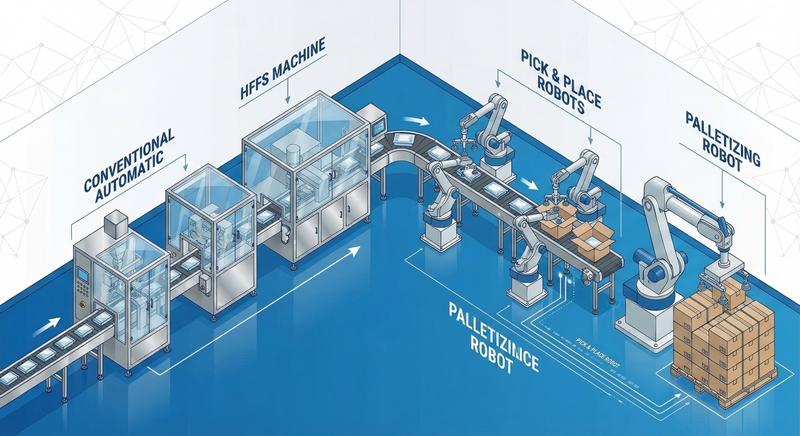
The packaging machine must be able to form the bag and seal it reliably.
Heat Seal Window: The inner layer (usually PE) must seal within a specific temperature range. If the range is too narrow, slight machine fluctuations can cause weak seals or melted bags.
Thickness and Consistency: Variations in film thickness can affect seal quality and how the material moves through the machine.
The physical design of the bag influences material choice.
Complex shapes like stand-up pouches (doypacks) or flat-bottom bags require materials with higher stiffness to maintain their shape on the shelf and during the forming process on a pouch packing machine. Simple pillow bags can often use more flexible, lower-cost films.
High-speed automated lines demand high-quality materials.
Coefficient of Friction (COF): The film must slide over the machine's forming collar without dragging (too high COF) or slipping (too low COF).
Rollstock Quality: For vertical or horizontal form-fill-seal machines, telescoping rolls or poor tension control can lead to significant downtime and waste.
At LTC Bagging System, we believe that packaging material and packaging machinery should never be planned in isolation.
We often see clients who have already procured a large quantity of pre-made pouches or film rolls, only to discover they are incompatible with standard bagging solutions. This leads to expensive material waste or the need for costly custom machinery modifications.
Our range of equipment is designed with material versatility in mind:
Our general Automatic Packing Machine series is engineered to handle a wide window of heat-sealable laminates and mono-materials reliably.
For specific applications, such as our Solid Pouch Packing Machine for granules or our Powder Pouch Packing Machine for dusty products, we incorporate features like specialized sealing jaws and dust control mechanisms to ensure secure seals even with difficult materials.
We also apply this cross-industry expertise to Non-Food Packaging Machines, ensuring that materials for items like hardware or medical devices run just as smoothly.
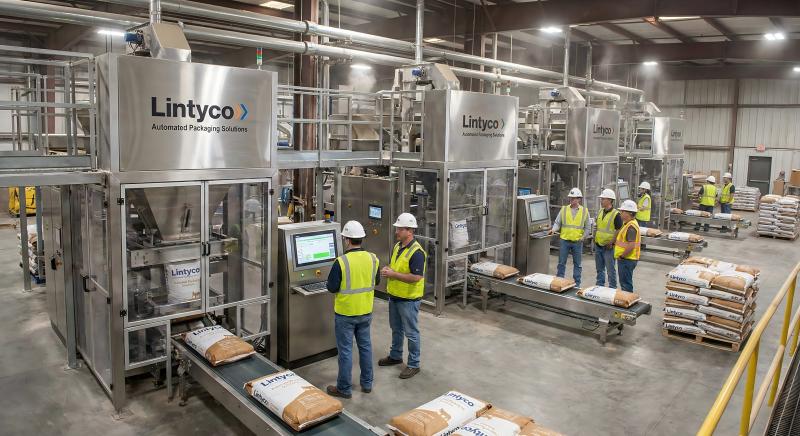
In a recent Case Study on Automatic Bagging Solution, we began the project by discussing the client's desired bag aesthetics and barrier requirements before finalizing the machine model. This ensured the equipment delivered had the correct sealing system and forming set for their specific material, resulting in a smooth startup and future-proof flexibility.
To help you navigate the selection process, use this practical framework when defining your requirements or speaking with suppliers.
Before asking for quotes, clarify these points:
Product Attributes: Is it dry, oily, liquid, or acidic?
Required Shelf Life: How long must the product stay fresh?
Transport & Storage: Is it frozen, refrigerated, or ambient? Is it e-commerce or retail?
Consumer Usage: Does it need a zipper, tear notch, or stand-up capability?
Sustainability Goals: Are you looking for recyclable or compostable options?
Existing Equipment: What are the specifications of your current packaging machine (if any)?
Cost Constraints: What is your target cost per bag?
Nuts/Coffee: Often require high oxygen and moisture barriers to prevent rancidity. A metallized film or foil laminate with a resealable zipper is common choice.
Frozen Foods: The priority is low-temperature durability (impact resistance). PE-heavy blends that remain tough when frozen are essential to prevent bag breakage.
Fine Powders: The material must not generate excessive static, and the sealant layer must be able to seal through fine dust contamination in the seal area.
When talking to film or machine suppliers, provide concrete data: product bulk density, target bag weight/volume, desired output speed (bags per minute), and bag dimensions.
Here are answers to some common questions about selecting packaging materials.
Q: Which packaging bag material is best for frozen food?
A: For frozen foods, the material must withstand low temperatures without becoming brittle. Polyethylene (PE) blends, often specially formulated for freezer applications (like IQF polyethylene), are commonly used due to their excellent low-temperature toughness and puncture resistance.
Q: What is the difference between PE and PP packaging bags?
A: PE (Polyethylene) is generally softer, more flexible, and has better impact strength at low temperatures, making it ideal for frozen goods or heavy items. PP (Polypropylene) is stiffer, clearer, and has a higher melting point, making it better suited for high-clarity product display or microwaveable applications.
Q: Can I use the same film material on different automatic packing machines?
A: Not always. Different machines (e.g., VFFS vs. HFFS) have different requirements for film roll unwind direction, core size, coefficient of friction, and sealing methods. It is crucial to confirm compatibility with your machine supplier before purchasing material.
Contact: LTC Bagging System
Phone: +8613337332946
E-mail: [email protected]
Add: Wenzhou, Zhejiang Province, China