Have you ever wondered how your food delivery arrives so quickly and neatly packaged?
There’s a silent hero behind that speed — the automated packaging system.
Imagine a traditional food packaging workshop: dozens of workers manually packing, labeling, and boxing food day and night. The process is slow, error-prone, and costly.
Now, a single smart packaging machine can do the same job ten times faster — with 100% accuracy.
This isn’t science fiction; it’s already happening in the global food service industry.
Industry data shows that most automation projects in packaging recover their investment within 12–36 months.
In other words, the costs truly come down, and companies see the payoff much sooner.
So how exactly are automated packaging systems transforming the industry? Let’s break it down.
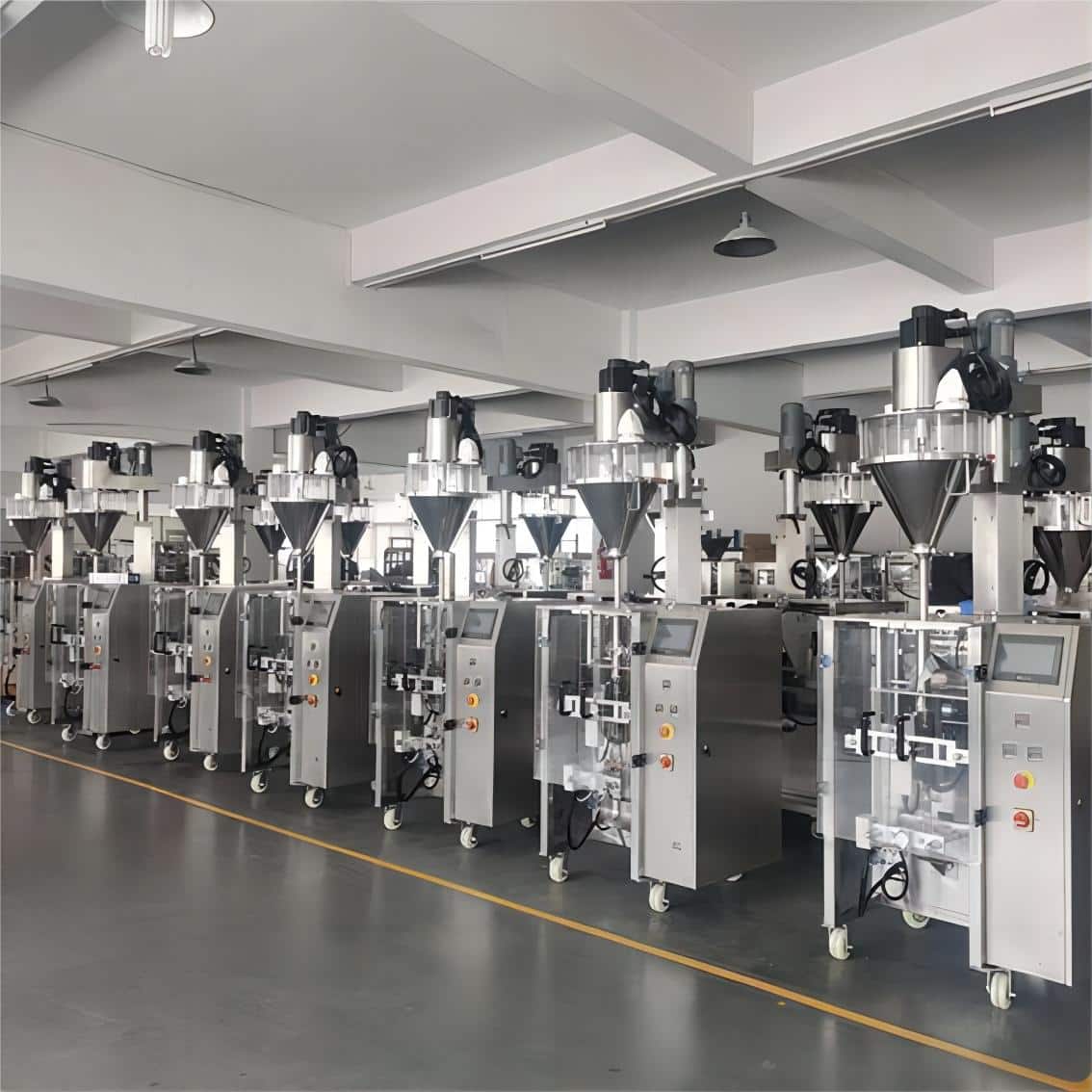
You might have heard the term Vertical Form Fill Seal (VFFS) machine.
It sounds technical, but simply put, it’s a machine that forms the bag, fills it, and seals it — all vertically — from a roll of film.
Why is that so powerful?
Because a VFFS machine can pack 60-300 bags per minute, while a human worker can manage maybe 10.
That’s the productivity gap that’s driving the global automation boom.
For the fast food delivery industry, this speed is essential.
The global online food delivery market grew from $157 billion in 2024 to $173 billion in 2025.
As orders surge, packaging efficiency directly determines whether a company can keep up with demand.
In short, packaging speed is survival.
Many of our clients report that after introducing automation, their production capacity doubled while their workforce actually shrank.
It’s not magic — it’s simply a shift from “labor-intensive” to “machine-driven” operations.
This one’s easy to understand.
The most direct benefit of automated packaging is — cost savings.
Where do the savings come from?
Reduced labor costs.
One automated system can replace 15–20 manual workers.
Consider annual salaries, benefits, and training costs — the savings add up quickly.
While the machine requires an upfront investment, the long-term labor savings are substantial.
Less material waste.
Automation ensures precise control of packaging material.
When humans pack manually, they tend to overuse film or reseal failed bags.
Machines don’t make those mistakes — they use the exact amount of material needed each time, cutting waste from 5–10% down to 1–2%.
Economies of scale.
When output doubles, your fixed costs spread across more units.
The packaging cost per item might fall from $0.05 to $0.02.
That seems small — until you multiply it by millions of products.
For food lovers, safety always comes first — and automated systems deliver it.
Machines never get tired.
Manual workers can make mistakes when fatigued — poor sealing, contamination, or mix-ups.
Machines, on the other hand, repeat the same actions flawlessly every time.
Enhanced traceability.
Modern systems can print production dates, batch numbers, and QR codes directly on each package.
If there’s an issue with a batch, it’s easy to trace it back instantly.
Better hygiene.
With fewer people touching the product, contamination risks drop dramatically.
This is particularly critical for cold chain and frozen food applications.
That’s why more and more food companies now treat HACCP compliance, traceability, and smart packaging as key indicators of competitiveness.
You might think automation means rigid, uniform, and unchangeable processes.
Actually, it’s the opposite.
Modern automated packaging machines are highly flexible.
The same unit can switch quickly between different package sizes — 100g, 500g, or 1kg — and even handle different shapes or materials.
You just change a few modules or adjust the parameters. No need for an entirely new machine.
This flexibility is a game changer for the food service industry.
For example, a meal delivery company may need to pack rice, noodles, sauces, and soups — all in different sizes and materials.
With a flexible automation system, they can adapt instantly to those complex demands.
Sustainability is one of today’s most important topics — but how do you actually achieve it?
Automated packaging systems are one of the most effective ways to go green.
Precise material control means less waste.
For instance, some advanced systems can print labels directly onto the packaging, removing the need for extra stickers and reducing plastic pollution.
Automation also enables optimized material usage — thinner films, recyclable materials, and biodegradable options.
These changes were hard to manage manually, but with automated precision, companies can protect both their products and the environment.
Three major factors make now the right time to act.
1. Labor shortages.
This is a global challenge.
After the pandemic, fewer people are willing to do repetitive manual work.
Automation fills the gap, freeing human workers for more valuable tasks such as quality control and product innovation.
2. Exploding market demand.
Food delivery, fast food, and ready-meal sectors are all expanding rapidly.
If your packaging process can’t keep pace, you’ll lose orders and market share.
Automation is now essential for staying competitive.
3. Mature technology, lower costs.
Ten years ago, automated packaging systems were only for large corporations.
Today, small and medium-sized businesses can afford them.
Technology has matured, prices have dropped, and ROI cycles have shortened to 1–3 years — making automation a far less risky investment.
At LTC Bagging System , we specialize in delivering efficient, reliable automated packaging solutions for the food service industry.
Our products include:
Vertical Form Fill Seal (VFFS) Machines — ideal for powders, granules, liquids, and pastes
Smart Packaging Systems — integrated with printing, tracking, and data analysis for food safety and brand protection
Eco-Friendly Packaging Solutions — compatible with sustainable materials to reduce your carbon footprint
Compared to competitors like honorpack.com or all-fill.com, our advantages are clear:
Customized Solutions — we design machines tailored to your specific products, not one-size-fits-all systems
Localized Support — we understand different market needs and provide responsive technical assistance
High Value for Money — same features, more reasonable prices, and faster ROI
Experienced Team — our engineers have an average of over 15 years of industry experience
A regional food delivery company once packed 5,000 meals a day with 30 workers.
After adopting our VFFS system, daily capacity rose to 15,000 meals, with only eight people handling supervision and quality checks.
They recovered their investment within three years and saved around ¥800,000 in annual operating costs.
More importantly, customer feedback improved — packaging looked more professional, hygienic, and informative.
That’s the hidden benefit of automation: better perception, better trust.
The rise of automated packaging systems isn’t the end of human work — it’s the beginning of smarter collaboration between humans and machines.
Machines handle repetitive packaging tasks.
Humans focus on innovation, quality, and creating better customer experiences.
That’s the right direction for industrial transformation.
If you’re still packaging manually, you’re already behind.
If you’re thinking about automation — now is the time to act.
Let us help you modernize your food packaging operations.
Visit LTC Bagging System or contact our team to explore a complete solution that fits your business.
Want to learn how to reduce production costs?
Read: How Efficient Packaging Systems Reduce Production Costs
Interested in food safety and traceability?
Read: Smart Packaging: Enhancing Food Safety and Traceability
Curious about eco-friendly packaging materials?
Read: Choosing and Applying Sustainable Packaging Materials
Contact: LTC Bagging System
Phone: +8613337332946
E-mail: [email protected]
Add: Wenzhou, Zhejiang Province, China