
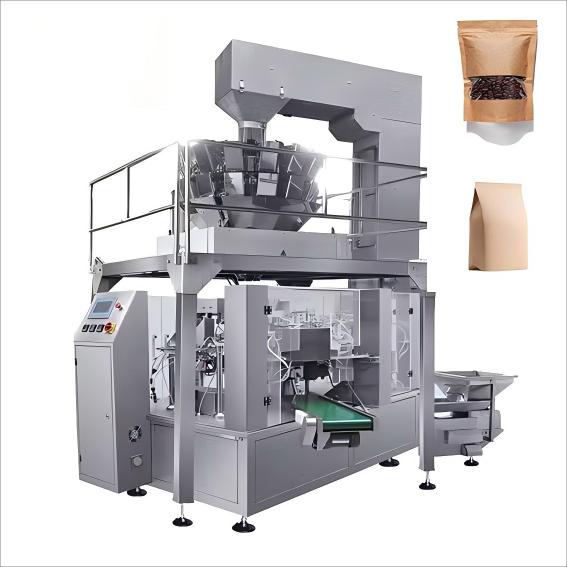
Best for: Free-flowing products
Granular products (coffee beans, rice, sugar)
Powder products (flour, spices, chemical powders)
Liquids/pastes (sauces, gels, cooking oils)
How it works: Products drop by gravity from above into bags formed from roll film
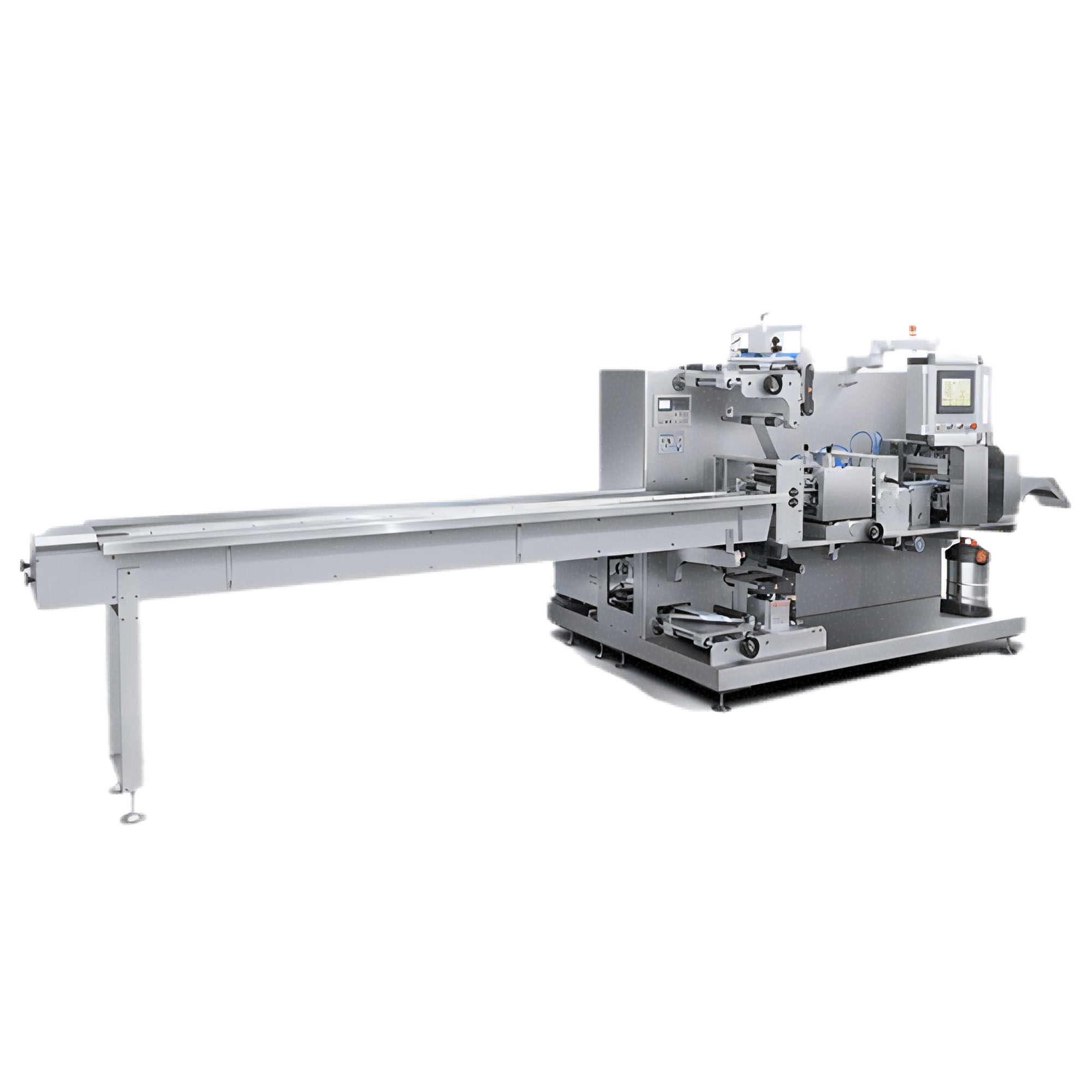
Best for: Shape-stable individual products
Bakery items (biscuits, bread, cakes)
Confectionery (chocolate bars, energy bars)
Hardware (individually wrapped parts, tools)
Medical supplies (syringes, masks, bandages)
How it works: Products move horizontally on a conveyor while film wraps and seals from the side
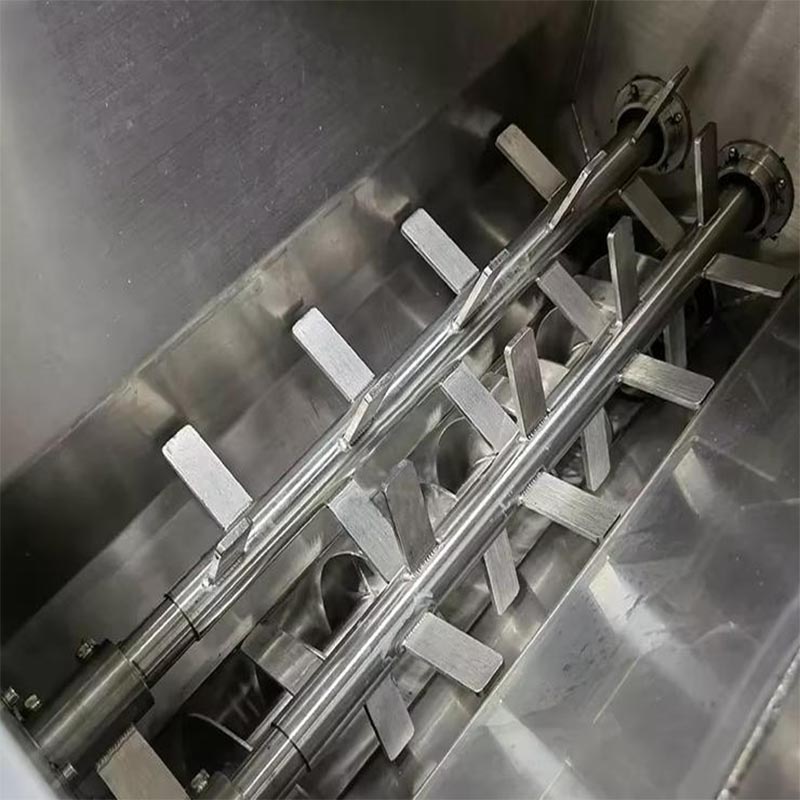
Film Feeding: Roll film is pulled toward the forming tube
Forming: The forming collar shapes flat film into a cylinder
Vertical Sealing: The sealing bar seals the film edges
Filling: The dosing system dispenses product from above
Horizontal Sealing & Cutting: Horizontal jaws complete top seal and cut the bag
Infeed: Products are placed on the conveyor at precise intervals
Film Wrapping: Film wraps the product from above or below
Fin Sealing: Rotating wheels create a longitudinal seal on the product's bottom or top
End Sealing: Rotary or reciprocating jaws seal both ends and separate packages
| Comparison | Vertical (VFFS) | Horizontal (HFFS) |
|---|---|---|
| Pack Style | Pillow bags, gusseted bags, quad-seal | Flow-wrap, fin-seal pouches |
| Product Handling | Gravity fill (drops from height) | Conveyor fed (gentle placement) |
| Footprint | Compact (uses vertical height) | Longer (requires horizontal floor space) |
| Speed/Efficiency | High speed for small bags; depends on dosing | Generally higher throughput for stable items |
| Seal Integrity | Possible dust in seal area | High precision; product may misalign |
| Changeover Time | Fast for film; slower for tube diameter | More complex; requires tooling adjustments |
| Total Cost | Generally lower initial investment | Higher complexity may increase maintenance |
When evaluating suppliers, ensure equipment meets these standards:
Machines must use food-grade stainless steel. Design should facilitate easy cleaning and comply with EU food safety regulations.
System must seamlessly integrate TTO thermal transfer or laser coders. Ensure comprehensive date and batch tracking capabilities.
Machinery must meet EU safety guarding and EHS requirements. Includes environment, health, and safety standards.
Always conduct Factory Acceptance Testing before shipment. Use your actual products and film to verify seal integrity.
Products are free-flowing (powders, granules)
Multiple bag formats needed (pillow, gusseted, quad-seal)
Limited floor space but adequate ceiling height
Wide product weight range
Products are shape-stable and regular
Flow-wrap appearance desired
Production line has linear layout
High-speed continuous packaging required
Fragile or sticky products may require specialized feeding designs. Special attention needed regardless of machine orientation.
LTC Bagging System provides versatile packaging technology meeting stringent international production requirements. Whether you prioritize speed or product diversity, we offer precise solutions.
For Granular and Powder Products
→ Powder Pouch Packing Machine
For Hardware, Snacks, or Stable Products
→ Solid Pouch Packing Machine
For Fully Automated Packaging Solutions
→ Automatic Packing Machine Range
Learn About Modern Safety Standards
→ Smart Packaging & Traceability Guide
Q: What's the main difference between VFFS and HFFS?
A: Vertical machines use vertical forming and gravity filling. Horizontal machines move products along a flat conveyor and wrap horizontally.
Q: Is a flow wrapper the same as an HFFS machine?
A: Technically, flow wrappers are a type of HFFS. However, "HFFS" commonly refers to all horizontal form-fill-seal systems.
Q: Which machine is better for powders?
A: VFFS is the industry standard. The vertical gravity-fill system and sealed forming tube prevent product loss and dust contamination.
Q: How do I choose based on factory space?
A: Choose VFFS when floor space is limited but ceiling height is adequate. Horizontal machines suit long, linear factory layouts better.
Q: What are the key factors to consider when choosing?
A: Key factors include: product form, target pack style, required speed, changeover needs, seal defect risks, and available production line layout space.
Our technical team is ready to provide customized packaging solution consultations.
Contact Us → Visit foodbaggingmachine.com
Contact: LTC Bagging System
Phone: +8613337332946
E-mail: [email protected]
Add: Wenzhou, Zhejiang Province, China