
Crushed chips and granola dust are not a packaging machine problem, they are a line design problem, and gravity is the main suspect. Every meter a fragile product falls, every transfer it tumbles through and every jaw that closes on it is a chance to break it, and breakage accumulates quietly until the bag opens to crumbs. The protection is not a gentler machine bolted on at the end; it is five rules applied from hopper to sealed bag: cut the drop distance, engineer the product path, choose a format that cushions, keep the seal zone clean of pressure on product, and measure breakage like any other yield loss. Each rule below is concrete enough to audit your own line against, and the case numbers come from published snack line results, cited where they appear.
Key takeaways
Breakage is cumulative: every fall, tumble and compression adds up, so fix the highest drop first, not the newest symptom.
Drop distance is the master variable: product that falls less arrives whole, and weigher height, filler position and tube design all serve it.
The product path needs engineering, not luck: vibration feeds, soft bucket angles and controlled transfers beat gravity chutes for fragile pieces.
Format cushions: slack-fill pillow bags and nitrogen headspace protect in transit; premade pouches protect premium clusters at retail.
The seal zone breaks what reaches it: jaws closing on product, or excess crimp pressure, create the breakage found at quality checks.
Measure breakage as a yield loss with a simple scoring audit; unmeasured crumb damage is accepted crumb damage.
| What you see in the bag | Where it actually started | The rule that fixes it |
|---|---|---|
| Fines and dust at the bottom | Long free falls from weigher or filler | Rule 1, cut drop distance |
| Clusters reduced to rubble | Tumbling transfers and steep chutes | Rule 2, engineer the path |
| Product crushed at the seal edge | Jaws closing on product, over-crimping | Rule 4, protect the seal zone |
| Breakage worse at high speed | Every impact scaled up with velocity | Rule 5, tune speed against fragility |
| Good product damaged after sealing | No cushioning in the pack itself | Rule 3, format that cushions |
Gravity breaks fragile snacks more than any machine does. A piece falling from a high multihead weigher into a bag arrives with the full kinetic energy of that fall, and brittle products, tortilla chips, freeze-dried fruit, granola clusters, spend that energy by shattering. The fixes are geometric: position the weigher or filler as low as the bag format allows, use drop tubes that guide product instead of letting it free-fall, and where the format permits, fill in two stages, a fast bulk stage and a slow topping stage, so the last and most fragile layer lands gently.
The principle shows up across published line results: snack case studies repeatedly list minimizing drop distance as a core design move to keep products intact, because it is the cheapest breakage fix that exists. Audit your line by walking it with a tape measure: write the fall height at every transfer, and attack the tallest number first.
Between hopper and bag, the product meets feeders, buckets, chutes and vibratory trays, and each has a gentle and a brutal configuration. Steep chutes let pieces accelerate and slam; vibration feeds set to aggressive amplitude bounce brittle clusters against tray surfaces; square-cornered transfers tumble everything that passes. The gentle versions are known and available: soft bucket internal angles, reduced feeder amplitudes, rounded transfer edges and controlled-speed belts.
The multi-SKU snack case on our site illustrates how much this depends on the specific product: a line running chips, popcorn, granola and dried fruits succeeded by analyzing each product's flow behavior and loading per-product recipes, because each SKU needed its own handling settings, not one compromise setting that broke half the portfolio. The published results on that multi-SKU snack packaging line show the format; the lesson for breakage is that handling parameters belong to the recipe, tuned per product and stored, not improvised per shift.
The package is the last line of defense, and its geometry decides how much protection travels to the consumer. A slack-fill pillow bag with nitrogen headspace suspends fragile pieces in a gas cushion that absorbs transport shocks; a tight-wrapped bag transmits every shock to the product. Premade pouches offer the premium end: a standing pouch with generous headspace protects clusters and presents them whole at retail, which matters when the selling point is the cluster itself.
For nut and trail mix products specifically, the format conversation includes resealable premium structures, and our rotary pouch line for nuts and dried fruit covers the zipper-pouch configurations that category favors. The wider pairing of product family to machine configuration is collected on the nuts and dried fruit packaging solutions page.
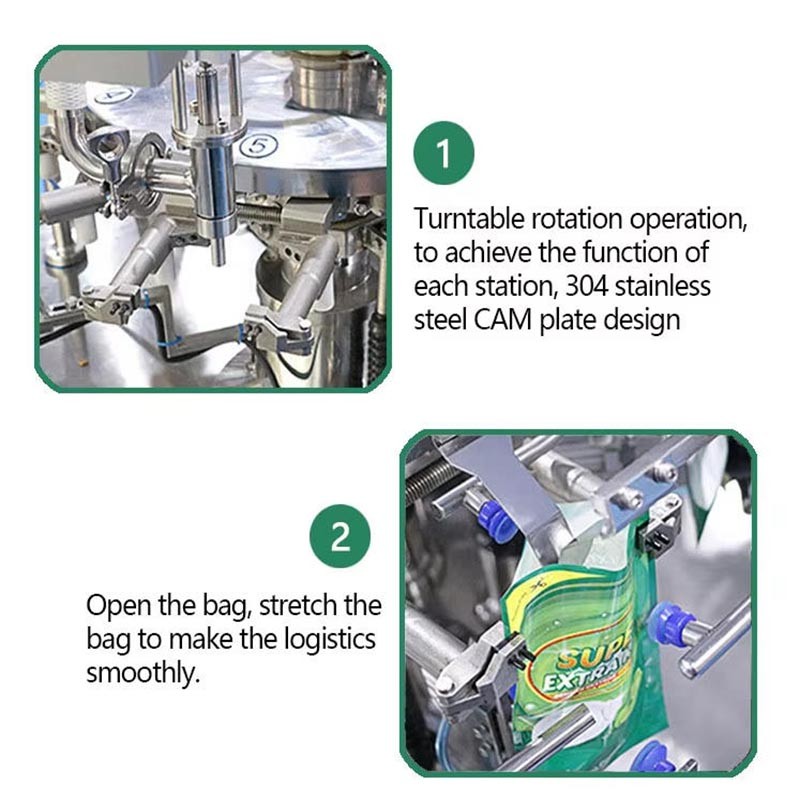
Two failure modes live at the jaws. First, product in the seal zone: jaws designed to weld film close on a chip or a cluster instead, crushing it and contaminating the seal in the same motion, which is why fill height and product settling belong in the setup. Second, over-crimping: excess jaw pressure or dwell that leaves crimp marks on the film also transmits that pressure inward to the product edge nearest the seal. Seal parameters are product-specific, the multi-SKU case treats sealing requirements as a per-SKU variable, and re-qualifying them after any product change is cheap insurance.
The published consistency case makes the downstream case: after a snack line moved from manual filling to automated weighing, filling and sealing, seal failures fell from 3 to 5 percent per batch to under 1 percent, alongside weight deviations narrowing from plus or minus 8 grams to plus or minus 2 grams. The full account is on the snack packaging consistency case study page. The breakage lesson inside those numbers: repeatable, controlled sealing is gentler than variable manual force, not just cleaner.
Breakage that nobody measures is breakage nobody fixes. The audit is simple: pull a filled bag at a fixed point in the shift, spread the contents on a tray, and score it, whole, partially broken, fines, by count or by a photo reference scale. Do it per SKU, per line speed and after every change to the path. The score converts crumb damage from a consumer complaint into a number that behaves like any other yield metric, and it tells you whether the last speed increase cost more in breakage than it paid in output.
Speed tuning is where that number earns its keep. Fragile products have a speed ceiling set by impact energy, not by machine capability, and the honest line speed is the fastest one that holds the breakage score. Raising speed past it does not increase sellable output at all; it converts good product into fines at a higher rate, which is the worst trade on the line.
Run this audit once per SKU with the line stopped, then again running, and carry the breakage scorecard from Rule 5 along. Start at the hopper: check outlet geometry and agitation settings, because a starved or surging feed forces operators into aggressive interventions that break product downstream. Follow the product into the feeder or weigher and note the fall heights inside it; bucket-to-bucket transfers and discharge heights are as guilty as the main drop into the bag.
Walk the transfer section slowly. Every chute, conveyor change and funnel is a decision point: steep angles accelerate pieces, square edges tumble them, and gaps between moving equipment shear whatever falls through. Mark each with a sticky note, then rank by drop height and impact surface, and you have the worklist geometry fixes are made of. At the bagger, watch the fill sequence: where product lands in a partly formed bag, how the final topping dose arrives, and whether the tube or nozzle touches the product pile at any point.
End at the jaws with the line running. Watch five consecutive cycles for product in the seal zone, and open five sealed bags immediately after to check crimp pressure marks on the film edge. The bags opened right at the machine, scored on the tray, close the loop: what the walk predicted and what the bag confirms, combined, is the complete breakage map of your line, and every fix on it is cheaper than the machine replacement someone will eventually propose for the problem.
Gentle handling is not slow handling by definition. It is shorter falls, controlled transfers and per-product recipes, and a properly engineered gentle line out-produces a brutal one because its output is all sellable. The pattern in the published snack cases is consistent: the automated lines that prioritized stability and consistency over raw speed delivered the output their owners actually wanted, whole product in sealed bags, at rates manual lines could not hold. Treat every fragility complaint as a geometry question first, a parameters question second, and a machine purchase last.
Because breakage lives in falls and transfers, and a new line can have the same old drops. Audit the line with a tape measure: the tallest fall from weigher or filler to bag is the usual culprit, followed by aggressive vibration feeder settings. Newness of the machine is irrelevant; geometry and parameters are what break product.
Indirectly, yes. Nitrogen headspace creates a cushion inside the bag that absorbs transport and handling shocks after sealing, protecting what the line already kept whole. It does nothing for breakage created before the product reaches the bag, which is why Rules 1 and 2 come first.
They can be, for the filling step: a pouch that stands still while being filled, at moderate speed, avoids the drop-and-tumble of a vertical line. The trade-off is throughput and material cost. Premium clusters justify it; volume pillow products usually engineer the vertical line gently instead.
The tray audit: open a filled bag, spread the contents, and score whole, partially broken and fines by count against a photo reference. Ten minutes per SKU per line speed builds the trend line that tells you whether a change helped, and it converts breakage into a number management can act on.
Up to the fragility ceiling, yes, and past it, no. Every fragile product has a speed where impact energy starts converting sellable product into fines faster than output rises. The breakage audit finds that ceiling, and the fastest honest line speed is just under it.
Not sure which bagging setup fits your product and output target? Send us your product details, bag format and target speed, and get a machine recommendation and quote.
Contact: LTC Bagging System
Phone: +8613337332946
E-mail: [email protected]
Add: Wenzhou, Zhejiang Province, China