
If your product runs in a plain pillow or gusseted pouch at volume, the vertical form fill seal machine wins on cost per bag, almost every time: rollstock is the cheapest way to buy packaging material, and a VFFS turns it into finished bags at the highest speeds in the industry. Choose the premade pouch machine instead when the bag itself carries requirements a VFFS cannot form, zippers, spouts, flat bottoms, five-panel printing, or when you run many SKUs at modest volumes and changeover speed matters more than line speed. The decision is economics with a format constraint, not a brand preference. Six cost lines decide it, and two rules can override it entirely. Both are laid out below with the arithmetic frameworks to run on your own numbers.
Key takeaways
Default for volume in simple pouch formats: VFFS, because rollstock material cost per bag is structurally lower than premade pouches.
Premade pouch machines win when zippers, spouts, flat bottoms or high-mix low-volume production dominate the requirements.
Run the six cost lines on your own numbers: material, investment, labor, changeover, maintenance and floor space.
The material line alone often settles it: the pouch premium multiplied by annual bag count is a recurring cost, machine price is paid once.
Override rule one: no zipper can ever be formed on a VFFS tube, so resealability requirements decide the format before economics do.
Override rule two: shelf-presence formats, flat-bottom and quad-seal, pay for themselves only in categories where the bag sells.
| Your situation | Format that wins | Why |
|---|---|---|
| Powder or granules, pillow or gusseted pouch, high volume | VFFS | Lowest material cost per bag, highest speed |
| Zipper or spout required | Premade pouch | Cannot be formed on a VFFS tube, hard constraint |
| Flat-bottom or quad-seal premium pack | Premade pouch | Format only exists premade |
| Many SKUs, short runs, frequent changeover | Premade pouch | Recipe and gripper change beats film re-threading |
| One or two SKUs at serious volume | VFFS | Amortizes everything: material, machine, labor |
| sachet and stick packs | VFFS | Multi-lane rollstock territory |
The two machine families are introduced here: the premade pouch packing machine family that fills bags someone else formed, and the vertical form fill seal machine family that forms, fills and seals from a roll of film in one continuous motion. Everything after this table is about putting numbers behind the right row.
VFFS: one machine, one roll, continuous motion. Film unwinds downward around a forming collar, becomes a tube, seals lengthwise, fills with a dose from a weigher or filler above, then cross-seals and cuts. One operator keeps film and product supplied. Costs live in the film itself (bought by kilogram, printed centrally), the sealing jaws and knives that wear, and the skill needed to thread and tune the film path.
Premade pouch: the bag arrives finished, the machine opens, fills, seals. A stacked magazine feeds pre-made pouches; a rotary carousel grips each one, opens it, blows it clean, fills it from a dosing unit above, often flushes nitrogen, then heat-seals or ultrasonic-seals the top. Costs live in the pouches themselves (bought by unit, printed before forming, pricier with zippers and spouts), the gripper sets per format, and a slower cycle than a VFFS.
That structural difference, film by the kilogram versus pouches by the thousand, is the engine of the whole comparison.
| Dimension | VFFS | Premade pouch machine |
|---|---|---|
| Material form | Rollstock film | Pre-formed pouches |
| Material cost per bag | Lowest | Higher, rising with zippers, spouts, special shapes |
| Typical speed class | High | Moderate |
| Formats possible | Pillow, gusset, sachet, stick | Zipper, spout, flat-bottom, quad-seal, stand-up |
| Changeover | Film re-thread, collar or former change, tuning | Recipe change plus gripper set |
| Operator skill demand | Higher, film path tuning is a craft | Lower, stable and repeatable once set |
| Print quality | Central pre-print or register-print on roll | Full pre-printed pouch, five panels possible |
| Integration | Weigher or filler above, standard interface | Dosing unit above, nitrogen flush common |
Read columns when shortlisting; read rows when two quotes disagree and you need to know which disagreement matters.
Run each line on your own numbers. The frameworks below hold regardless of supplier and currency, and every machine figure you receive should be treated as indicative and confirmed in writing with the supplier.
Line 1: material per bag. Get a rollstock price per thousand bags and a pouch price per thousand for the same product and print. The difference, multiplied by annual bag count, is a recurring cost. This line alone frequently exceeds the machine price difference within one or two years at volume. It is the first number to compute and the last one to forget.
Line 2: machine investment. Premade pouch machines and VFFS lines overlap in price more than buyers expect, because a production-grade VFFS line includes the weigher or filler above it. Compare configured lines, not hero units, and treat any figure without integration scope as incomplete.
Line 3: labor. A VFFS wants one skilled operator who can tune a film path; a premade pouch machine wants a less specialized operator and sometimes runs closer to unattended. Wage levels where your plant sits decide how much this line weighs.
Line 4: changeover. Count SKUs, then multiply: each VFFS changeover pays a film re-thread and tune, easily half a shift early in a line's life and faster with practice. Premade format changes are recipe-plus-grippers. High-mix plants feel this line weekly; single-SKU plants never feel it at all.
Line 5: maintenance and wear. VFFS wear concentrates in jaws, knives and belts, all consumable and priced; premade machines wear grippers and sealing bars. Ask each supplier for the consumables list with the quote, then price three years of it.
Line 6: floor space and utilities. VFFS lines run tall, weigher deck above bagger, so check door height and platform access before falling in love; premade machines run compact. Compressed air demand differs significantly between the families, and air is not free at scale.
For dosing economics above a VFFS, our guide on bagging powder without dust and weight errors works through the filler-and-feedback arithmetic that applies regardless of bag format below it.
A labeled estimate to show the mechanics, using illustrative figures you should replace with your own. Suppose a plant runs 3,000 bags per hour for one 8-hour shift, 250 days a year, roughly 6 million bags annually. Say rollstock works out to 1.0 cent of material per bag and the equivalent premade pouch to 1.8 cents, a realistic-spread example, not a quote. The material line then favors VFFS by 0.8 cents per bag, which is 48,000 currency units per year, every year.
Now suppose the configured lines differ in investment by 20,000 in the premade machine's favor, changeover is irrelevant at one SKU, and labor plus maintenance roughly cancel. The material line repays the investment difference in about five months, and after that the VFFS pulls ahead permanently. Flip one assumption, a second zipper SKU arrives next year, and the same arithmetic reverses, because the zipper forces the premade format regardless.
The lesson is not which machine won the example; it is that the example took ten minutes and two supplier material prices, and it will always beat a decision made on machine price alone.
Rule one: the hard format constraint. A zipper cannot be formed on a VFFS tube. If your category expects resealability, protein and granola snacking, premium rice, pet treats, the premade route is not a luxury to cost-justify against rollstock; it is the only road to the format, and the question becomes which premade machine, not whether.
Rule two: shelf presence that sells. Flat-bottom and quad-seal packs print five panels and stand like bricks on shelf. In categories where the bag does merchandising work, the pouch premium buys shelf presence, and the honest calculation credits it as marketing spend, not packaging overspend. Brands that skip this step and buy VFFS on price often end up buying the premade machine two years later anyway, having paid twice for one lesson.
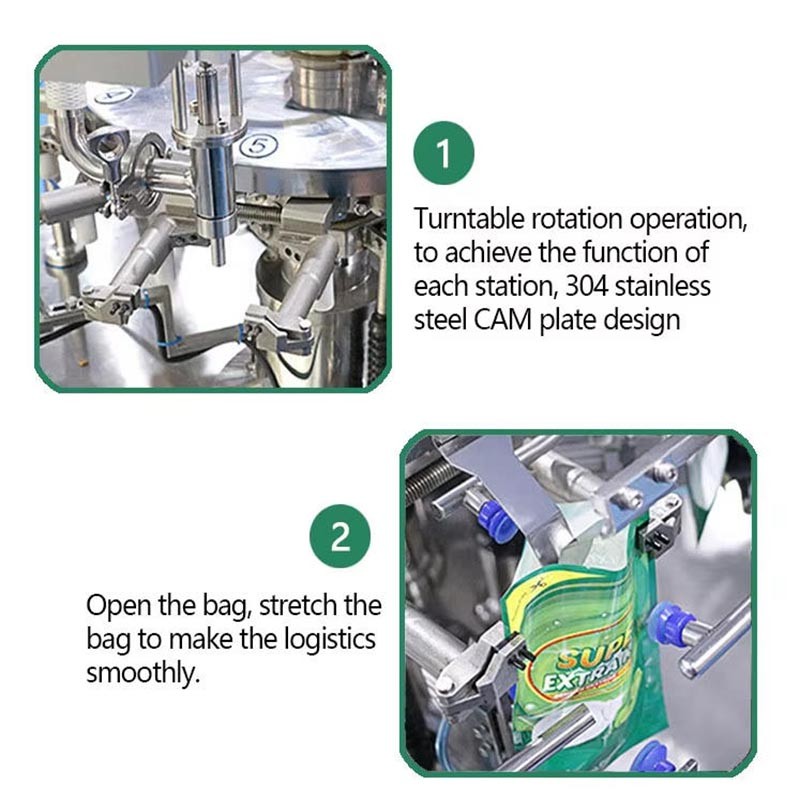
Inside the premade machine itself there is a second-tier decision buyers often meet late: servo versus pneumatic actuation, with real consequences for multi-SKU food producers. Our servo versus pneumatic comparison for premade pouch machines covers that layer once the format question is settled.
| Mistake | What it costs later | The check before signing |
|---|---|---|
| Buying VFFS on price with a zipper on the roadmap | Second machine purchase within two years | List every format the next 3 years of SKUs needs |
| Buying premade for a single high-volume SKU | Material premium compounds annually forever | Compute line 1 before line 2 |
| Comparing hero-unit prices, not configured lines | Integration surprises mid-project | Quote must include dosing, frame, discharge |
| Ignoring operator skill availability locally | A VFFS nobody can tune runs at half speed | Audit your bench before choosing |
| Forgetting nitrogen flush in the format decision | Oxidation-sensitive product limits the choice | Product shelf-life spec belongs in the brief |
Generally yes. VFFS lines run continuous motion at the highest speeds in pouch packaging, while premade pouch machines cycle discrete bags at moderate rates. Whether the gap matters is an arithmetic question: multiply your shift hours by the achievable rate at your dose weight, not the catalog maximum, and compare against required output.
Partially. VFFS can produce gusseted pillow formats that stand somewhat, but true stand-up pouches with flat bottoms, zippers and five-panel print are premade territory. Where your product sits between those poles is a format consultation, not a brochure comparison.
For a plain pillow pouch at moderate volume, VFFS is usually the lower total cost, led by material. For any premium format or a multi-SKU launch, premade starts closer to its steady state, since changeovers cost less and the machine needs less tuning skill. Run lines 1 through 4 of the cost section before believing either sentence.
They need a dosing unit above them, weigher, auger or piston depending on product, the same as a VFFS does. The difference is integration scope: quote the line including dosing, frame and discharge, or the comparison between formats is not honest.
They are the hard constraint: a zipper must be pre-installed in a premade pouch, because no VFFS forms one on the tube. The moment resealability enters the product requirement, the format decision is made, and the remaining work is choosing the right premade machine and pouch supplier.
Not sure which bagging setup fits your product and output target? Send us your product details, bag format and target speed, and get a machine recommendation and quote.
Contact: LTC Bagging System
Phone: +8613337332946
E-mail: [email protected]
Add: Wenzhou, Zhejiang Province, China